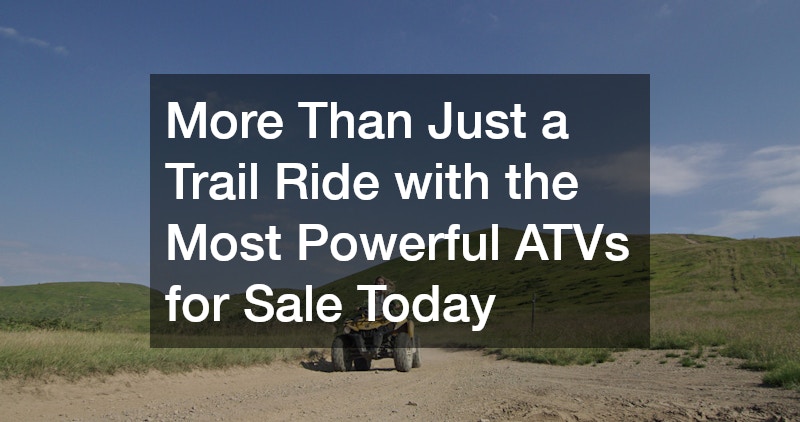
The off-road landscape has undergone a radical transformation in 2026. While the market was once dominated by work-ready utility quads, we have officially entered the age of “hyper-performance” machines. Today’s flagship ATVs for sale have surpassed the 90-horsepower mark, blurring the lines between standard vehicles and specialized racing equipment. The most shocking development is the feat of 1000cc machines reaching triple-digit speeds—a milestone previously reserved for high-end side-by-sides.
This new era of raw power has redefined rider expectations, shifting the focus from simple utility to high-stakes adrenaline and mechanical precision.
Engineering the Apex: The 1000cc Powerhouse
At the heart of this revolution is a mechanical shift toward heavy-hitting V-Twin and Parallel-Twin engines. In the 2026 market, the 1000cc class is the undisputed king of the trail. The current benchmark for production power rests with the 91 hp Rotax 1000R engine found in the latest Can-Am lineup. This liquid-cooled engine utilizes advanced fuel injection and optimized airflow to deliver acceleration that was unthinkable just a decade ago. It provides a relentless pull across the entire powerband, ensuring that whether you are climbing a massive dune or blasting down a fire road, you always have power in reserve.
Power-to-Weight Ratios and Why They Matter
When browsing ATVs for sale, savvy buyers know that raw horsepower is only half the story; the power-to-weight ratio truly defines the riding experience. For example, a 91 hp Renegade weighing roughly 795 lbs feels significantly faster and more “flickable” than a heavier utility model with similar displacement. Enthusiasts use the “lb per hp” metric to compare models; a lower number typically indicates a more aggressive machine prone to lifting the front wheels. Understanding this ratio helps riders choose a quad that matches their physical ability to manhandle a heavy machine at high speeds.
Intelligent Throttle Control (iTC™)
To manage this massive output, manufacturers have introduced Intelligent Throttle Control (iTC™). This “Fly-by-Wire” technology replaces traditional cables with electronic signals, allowing the vehicle’s computer to manage torque delivery. Most premium models offer selectable riding modes, such as Sport, Standard, and ECO. Sport mode provides an instantaneous response for experienced racers, while Standard and ECO modes smooth out the delivery. This makes high-output engines manageable for different skill levels or particularly technical terrain, where a sudden jolt of power could be dangerous.
Suspension and Handling: Taming the Beast
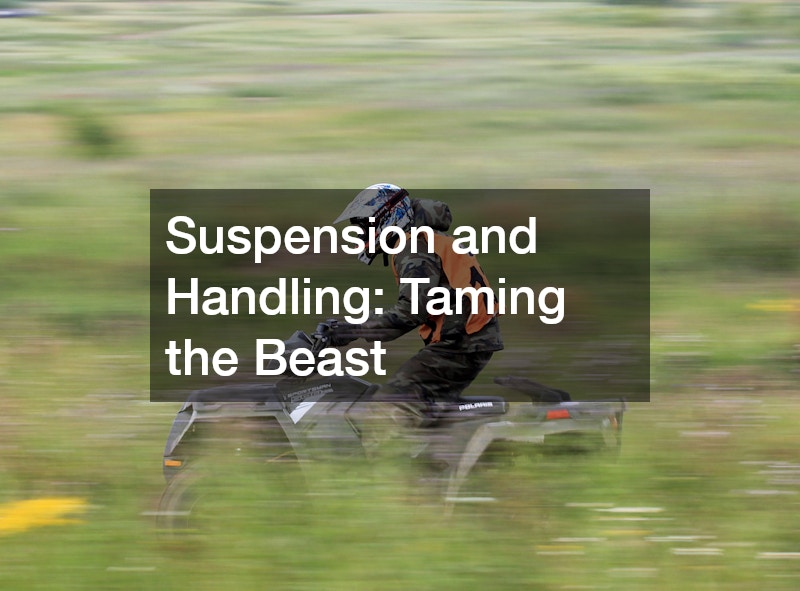
Possessing nearly 100 horsepower is useless if you cannot keep the tires on the ground. Modern sport quads meet this challenge with professional-grade suspension as standard equipment. Components like FOX 1.5 PODIUM RC2 shocks and Walker Evans 3-Way adjustable systems allow riders to fine-tune compression and rebound settings for specific trails. Additionally, the industry has moved toward wider stances for increased safety; the Scrambler XP 1000 S features a massive 55-inch width. This wider footprint is essential for preventing the vehicle from tipping during high-speed cornering or when navigating uneven off-pavement sections.
Traction Tech: Differentials and Tires
Transferring high-output power to the dirt requires advanced traction technology. Systems like Visco-4Lok and On-Demand AWD act as the “brain” of the drivetrain, automatically distributing power to the wheels with the most grip during high-speed launches. Furthermore, premium ATVs for sale now come standard with 25-inch or 27-inch performance tires like ITP Holeshots or Duro PowerGrips. These tires are designed with reinforced sidewalls to withstand the rotational stress of 90+ mph speeds without delaminating or losing grip in tight corners.
Electronic Power Steering (EPS) for High-Speed Precision
Steering a heavy, powerful quad at 60+ mph is physically exhausting and requires constant correction. Multi-select Electronic Power Steering (EPS) has become a vital safety feature. These systems are velocity-sensitive, providing more assistance at low speeds for easy maneuvering and “tightening up” at high speeds to provide better trail feel. This technology also significantly reduces “kickback” when hitting ruts, protecting the rider’s wrists and ensuring the machine maintains a straight line during high-speed runs.
The Competition: Can-Am vs. Polaris vs. Yamaha
The “Big Bore” segment is currently a three-way battle. The Can-Am Renegade 1000R XXC is the speed king with 91 hp and a race-ready setup. Its primary rival, the Polaris Scrambler XP 1000 S, is regarded as the chassis master, offering 89 hp and class-leading 14.5 inches of ground clearance. Meanwhile, the Yamaha Raptor 700R remains the lighter, manual-shift alternative. Despite having lower displacement, its superior power-to-weight ratio and sport-tuned geometry allow it to hold its own against the 1000cc giants, especially in the dunes.
Is a Hyper-Quad Right for You?
The most powerful ATVs for sale in 2026 are specialized tools that require absolute respect and advanced riding skills. These machines represent the absolute pinnacle of off-road engineering, built specifically for those who find “normal” trails far too slow. If you have the experience to handle 90+ horsepower, these quads offer a level of adrenaline unmatched by anything else on four wheels.